
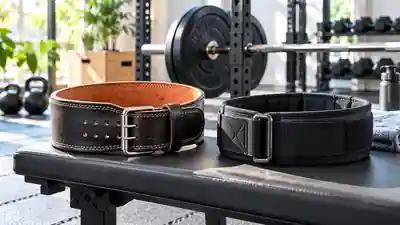

Affiliate disclosure: This guide may contain affiliate links. If you buy through an eligible link, Maximum Health Benefits may earn a commission at no additional cost to you. Commercial relationships do not determine our conclusions.
How this guide was made: This is a specification- and use-case-based editorial comparison, not a claim that our editors personally trained in every belt. We reviewed current manufacturer dimensions, materials, buckle systems, competition status, sizing guidance, and the type of lifting each design is intended to support.
Last reviewed: October 2026.
What a Lifting Belt Actually Does
A lifting belt gives your abdominal wall a firm surface to brace against. Studies of heavy squats and deadlifts have found that belts can increase intra-abdominal pressure, and a 2026 study reported improved squat performance with a belt. That can make a lifter feel more supported and may help performance under heavy loads.
That does not mean a belt makes poor technique safe or guarantees protection from back injury. Research has not established that wearing a belt makes the spine invulnerable or that everyone should use one. Beginners should first learn bracing, breathing, squat/deadlift technique, and progressive loading.
Quick Picks
| Pick | Design | Best fit | Main caution |
|---|---|---|---|
| SBD 13mm Lever Belt | 13mm, 10cm wide, lever | Best premium competition powerlifting belt | Very stiff, heavy and expensive |
| Gymreapers 10mm Lever Belt | 10mm leather, lever | Best value lever belt for powerlifting-style training | Lever sizing is less convenient if waist size changes often |
| REP USA Premium Leather Belt | 10mm, 4-inch, single prong | Best all-around premium prong belt | Leather requires break-in and care |
| Rogue Oly Ohio Lifting Belt | 10mm leather, 4-inch back to 2-inch front taper | Best premium Olympic-weightlifting belt | Taper provides less uniform torso contact than a powerlifting belt |
| Element 26 Self-Locking Belt | Nylon, quick-release/self-locking | Best for functional fitness and fast transitions | Less rigid than thick leather powerlifting belts |
| REP Leather Olympic Lifting Belt | Leather, 4-inch back to 2.5-inch front taper | Best value leather Olympic-lifting option | Not the ideal shape for lifters who want maximum 4-inch uniform support |
1. SBD 13mm Lever Belt — Best Premium Powerlifting Pick
Why it stands out: SBD’s current belt is 13mm thick and 10cm wide—the maximum belt dimensions allowed in many powerlifting rule sets. It uses four layers of British cowhide and a patented lever that can be adjusted without completely relocating the lever hardware. The current model is IPF approved.
Who it may suit: experienced squat/deadlift lifters and competitive powerlifters who specifically want maximum rigidity and a lever closure.
What to know: A 13mm belt is not automatically “better” than a 10mm belt. It is very stiff and can be uncomfortable for smaller lifters, short torsos, high-volume training, or people new to belted lifting.
View current SBD 13mm Lever Belt information
2. Gymreapers 10mm Lever Belt — Best Value Lever Belt
Why it stands out: The current Gymreapers 10mm Lever Belt uses a leather construction, reinforced stitching and a lever closure. Gymreapers lists the model as IPF approved and provides sizing based on circumference around the core rather than pants size.
Who it may suit: lifters who want lever-belt convenience and powerlifting-style support without moving to a 13mm premium belt.
What to know: Traditional lever belts are fast to open and close but are less convenient than a prong belt when you need major fit changes. Measure where you actually wear the belt.
View current Gymreapers 10mm Lever Belt information
3. REP USA Premium Leather Lifting Belt — Best All-Around Premium Prong Belt
Why it stands out: REP’s current USA Premium Leather Belt is 4 inches wide and 10mm thick, made from full-grain vegetable-tanned American leather with a stainless-steel single-prong buckle. A prong belt offers simple hole-to-hole adjustment without lever hardware.
Who it may suit: lifters who squat and deadlift heavily but prefer the adjustability and simplicity of a single-prong belt.
What to know: Quality leather belts need break-in and occasional conditioning. A uniform 4-inch profile can also feel bulky for lifters with a short torso.
View current REP USA Premium Leather Lifting Belt information
4. Rogue Oly Ohio Lifting Belt — Best Premium Olympic-Weightlifting Pick
Why it stands out: Rogue’s current Oly Ohio Belt uses 10mm vegetable-tanned leather but tapers from 4 inches across the back to 2 inches at the front and sides. That reduced front profile is designed to interfere less with the bar and receiving position during the snatch and clean and jerk.
Who it may suit: Olympic weightlifters who want substantial leather support without the full-width front profile of a powerlifting belt.
What to know: If your priority is maximum uniform torso contact for squat and deadlift, a 4-inch all-around powerlifting belt may be more appropriate.
View current Rogue Oly Ohio Lifting Belt information
5. Element 26 Self-Locking Weightlifting Belt — Best for Functional Fitness
Why it stands out: Element 26’s current Self-Locking Belt uses a premium nylon body, a quick-release/self-locking buckle, a uniform profile and highly adjustable fit. The design favors rapid transitions and mobility over maximum leather-belt rigidity.
Who it may suit: CrossFit-style training, mixed conditioning sessions, Olympic lifting, and workouts where you need to loosen or remove the belt quickly between movements.
What to know: A flexible nylon belt does not provide the same feel as a 10–13mm leather powerlifting belt. That is a design tradeoff rather than a defect.
View current Element 26 Self-Locking Belt information
6. REP Leather Olympic Lifting Belt — Best Value Leather Olympic-Lifting Option
Why it stands out: REP’s Leather Olympic Lifting Belt tapers from a 4-inch back to a 2.5-inch front. The narrower front provides more room around the hips and bar path than a uniform powerlifting belt while retaining the feel and durability of leather.
Who it may suit: Olympic lifters or general strength trainees who want a leather belt but find a full 4-inch front uncomfortable during deep receiving positions.
What to know: A tapered Olympic belt and a uniform powerlifting belt are solving different problems. Pick based on your lifts rather than assuming the thicker or wider belt is always superior.
View current REP Leather Olympic Lifting Belt information
10mm vs. 13mm
For most recreational lifters, a good 10mm leather belt is already very stiff. A 13mm belt is primarily attractive to experienced powerlifters who want maximum rigidity and know they tolerate the extra bulk. Beginners do not need to start with the thickest legal belt.
Lever vs. Prong vs. Nylon
- Lever: fast and repeatable once adjusted; excellent for powerlifting-style training.
- Single prong: simple, durable and easy to change one hole tighter or looser between sessions.
- Nylon/self-locking: lighter, more flexible and easier to loosen quickly during functional fitness or Olympic lifting.
- Tapered leather: gives leather support while reducing front bulk for dynamic Olympic lifts.
How Tight Should a Lifting Belt Be?
The belt should be snug enough that you can create pressure against it when you brace, but not so tight that you cannot expand your abdomen and torso. REP’s current guidance explicitly warns that yanking the belt excessively tight can make it harder to expand the torso and create effective tension.
Measure your circumference at the position where you actually plan to wear the belt while wearing normal training clothes. Do not select belt size from jeans or pants size.
When a Belt Makes Sense
- Heavy squats and deadlifts once bracing technique is established.
- Powerlifting competition or competition-specific practice.
- Olympic lifting when a tapered or flexible belt improves bracing without interfering with the bar.
- Top sets or high-intensity work where a lifter prefers the additional bracing feedback.
What a Belt Cannot Fix
A belt cannot compensate for poor exercise selection, uncontrolled loading, inadequate technique, or an injury that needs assessment. If lifting causes persistent or severe back pain, radiating symptoms, weakness, numbness, or loss of function, stop relying on equipment changes and seek appropriate professional evaluation.
Editorial Sources
- Effects of a belt on intra-abdominal pressure during weight lifting
- The effectiveness of weight-belts during the squat exercise
- 2026 study of weightlifting belts and squat performance/postural stability
- Effects of abdominal belts on intra-abdominal pressure and trunk muscles
- Updated systematic review of injuries in weightlifting and powerlifting
This article provides general training information, not individualized medical advice. Product specifications and competition approvals can change; confirm current rules with your federation before buying equipment for competition.


